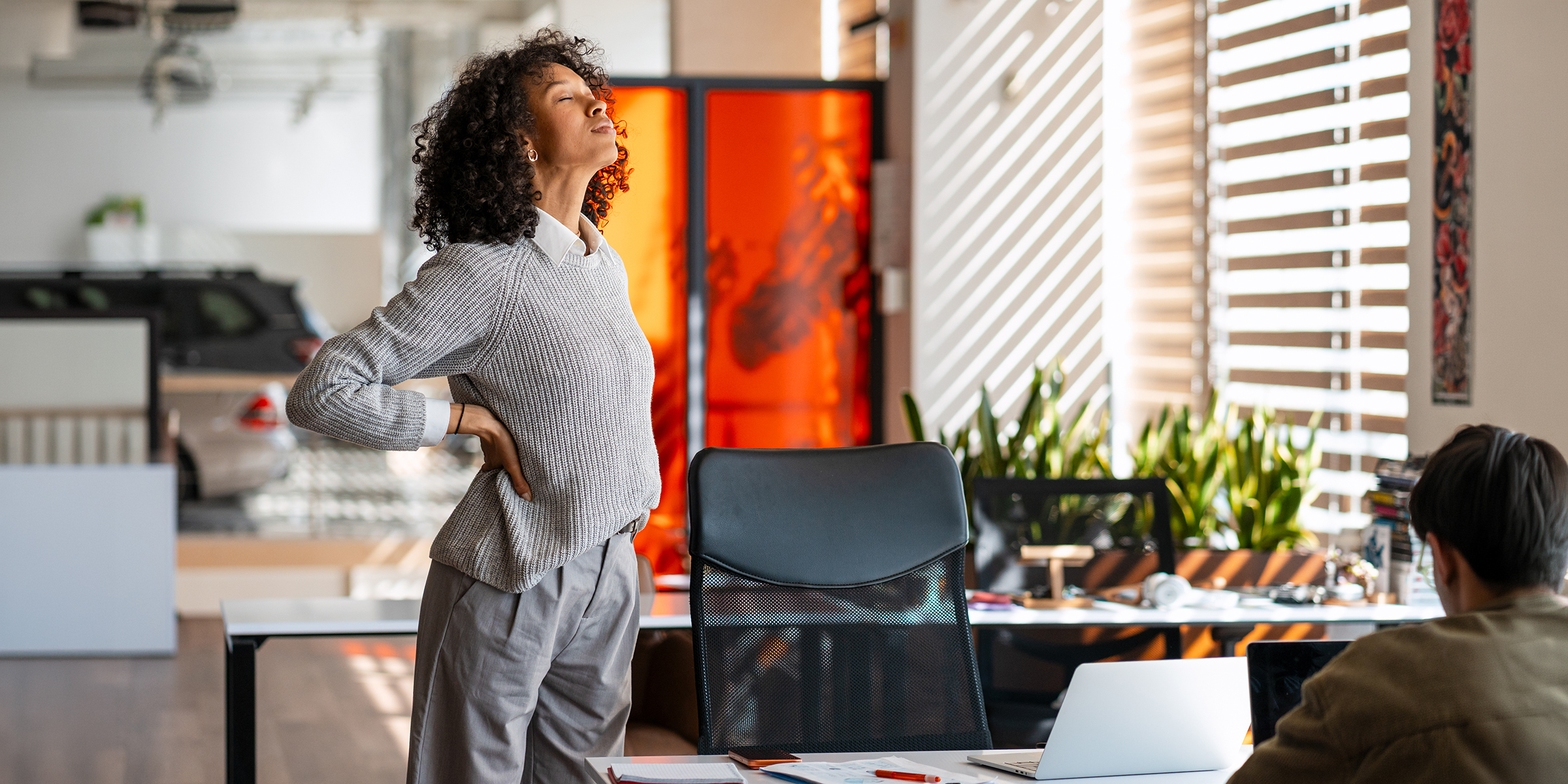
If your back feels tight or sore at the end of the day, doing a few gentle stretches can help make it feel more relaxed and comfortable. You don’t need a full workout or any special training to get started. A simple, consistent routine you can do at home is often enough to help ease everyday stiffness.
Stretching will not undo every source of back discomfort, and it works best alongside good daily habits. It is not the only way to relieve back pain at home, but for the everyday stiffness that builds from sitting, standing, and moving through a busy day, stretching is one of the simplest places to start.
Why Stretching Supports Spinal Health
Your spine is surrounded by muscles that help support you and allow you to move all day long. These back muscles work best when they are allowed to move through a full range of motion. The problem is, most days don’t give them much opportunity to do that.
Think about how a typical day goes. You sit during your commute, then sit at your desk, followed by more sitting during dinner and while relaxing on the couch in the evening. Even standing for long periods keeps your back in one position. When muscles stay in the same shape for many hours, they tend to tighten and become shorter. This tightness is often what causes that stiff feeling or a dull ache in your lower back at the end of the day.
Repeatedly staying in the same positions adds to the strain. Bending forward over your phone, leaning into a keyboard, or hunching to lift something many times a day all cause the same muscles to work in a tight, cramped way. Over time, these muscles get used to being in that shortened position and start to resist moving differently.
Gentle stretching can help offset this. It can improve your range of movement, reduce muscle tightness, and help the muscles around your spine relax. Doing regular stretches may also promote better blood flow to the muscles, making them feel less tense and easier to move. Think of it as easing the daily stress on your back, similar to loosening a knot before it gets tighter.
Movement matters too. For everyday low back pain that isn’t caused by a specific injury or illness, staying active usually helps more than sitting still for a long time. Stretching is best when combined with other regular activities like walking, light exercise, and gentle core exercises when suitable for you.
Being consistent is more important than doing very intense workouts. The muscles that support your spine respond well to regular, gentle movement, and stiffness usually decreases when you stay active rather than remaining still. Doing a short stretching routine regularly can improve a tight back more than doing one long stretch session once in a while. It’s an easy way to start improving joint mobility at home.
Simple Daily Stretches for Your Back
These gentle stretches that are good for your lower back and spine can help keep you moving every day without putting too much effort in. Begin in a comfortable, relaxed position, move slowly, and take deep breaths as you gently stretch. A good stretch should feel like a mild pull or gentle tension, not sharp, spreading, or increasing pain.
Try not to bounce, force, or push your body beyond what feels okay. The point isn’t to do perfect yoga poses or stretch as deeply as possible. Instead, it’s about improving your movement, feeling more comfortable, and helping your back feel less tight.
Knee-to-Chest
Lie flat on your back with your knees bent and feet flat on the ground. Gently pull your left knee towards your chest, holding behind your thigh until you feel a light stretch in your lower back and hip. Keep your right leg relaxed on the floor, then slowly lower your left leg and switch sides. Repeat on the other side.
If it feels better, you can also bring both knees toward your chest at the same time. This is one of the softest, easiest stretches to help relieve lower back pain and tension, making it a comfortable starting position for many people.
Hamstring Stretch
Lie flat on the floor with one leg straight and the opposite leg bent. Slowly extend the bent leg upward, holding behind the right thigh or left thigh depending on which side you are stretching. Keep the bottom foot relaxed, and avoid locking the knee as you move.
This stretch can help loosen up tightness along the back of your leg, which might make your lower back feel more comfortable during everyday activities. Be gentle with the stretch, especially if you feel tightness from your buttocks down the back of your leg.
Cat-Cow
On your hands and knees, with your palms flat and your spine in a neutral position, slowly alternate between arching your back upward and letting your stomach lower toward the floor. Let your head and neck follow the movement naturally without forcing either position.
This exercise helps to gently move your entire spine, from the lower back to the shoulders. Many people find it helps loosen up tight back muscles because it encourages movement without holding any deep stretches.
Child’s Pose
From your hands and knees, sit your hips back toward your heels and keep your hands extended along the floor. Let your chest soften toward your thighs while your arms reach forward. This lengthens the lower and mid back, encourages deep breaths, and tends to feel restful rather than effortful.
Child’s pose is one of the easiest poses to come back to between other stretches. If your knees feel uncomfortable, try sitting back a little less or choose a different stretch that feels better for you.
Lower Back Rotation
Lie flat on the floor with your knees bent, feet planted, and shoulder blades resting flat on the floor. Let both knees fall gently to the left side, pause briefly, then bring them back through center and move in the opposite direction. Repeat on the opposite side with the same slow control.
This gentle twisting helps relieve tightness in the lower back and the muscles alongside it. It can feel especially nice after sitting for a long time because it helps stretch and relax the lower back, which can get stuck in a rounded or forward position.
Seated Spinal Twist
Sit tall with one leg straight and the other leg bent. Place the crossed leg over or beside the extended leg in a way that feels comfortable. For example, your right ankle or right foot may rest outside the opposite knee, depending on your mobility.
Gently twist your torso toward the bent knee, breathing naturally to guide the movement. You can place your right hand behind you for support but avoid pushing to force the twist deeper. Moving slowly into the twist helps loosen the muscles along your middle and upper back, reaching areas that a simple forward stretch might miss.
Hip Flexor Stretch
Tight hip flexors can make the lower back feel more restricted, especially after long periods of sitting. Start in a half-kneeling position with your right knee on the floor and your left foot in front of you. Keep your torso tall, gently tuck your pelvis, and lean forward only until you feel a stretch through the front of the right hip.
Switch sides and do the same with the other leg in front. Remember, this stretch isn’t about pushing into a deep lunge; it’s about helping your hips and lower back feel more relaxed and aligned after sitting for a while.
Pelvic Tilt
Lie on your back with your knees bent and feet flat on the floor. Gently tighten your abdominal muscles to flatten your lower back toward the floor, then release back to a neutral position.
This is a gentle, controlled move, but it activates the deep muscles in your core that support your lower back. Because the movement is small, it can be a good step between stretching and easier back exercises that help strengthen and stabilize your spine.
Standing Back Extension
When you have been sitting for a while, stand and place your hands on your lower back, then lean gently backward. Keep your feet steady, your breathing slow, and your movement controlled.
This stretch helps open up the front of your spine after you’ve been leaning forward for a while. It’s easy to do at your desk or in the kitchen, so you can do it pretty much anytime during the day.
How Decompression Complements Stretching
Stretching helps to lengthen the muscles around your spine. Decompression, on the other hand, focuses on relieving the pressure directly on your spine itself. Throughout the day, gravity pushes down on your spine as you sit, stand, and move, which can lead to a feeling of stiffness or compression after a long day.
Stretching makes the muscles easier to move and more flexible, while decompression reduces the pressure inside the spine. They work well together: stretching loosens tight muscles, making movement easier, and decompression creates more space and less pressure in your spine—something stretching alone might not completely do.
Many people find that using both approaches feels better than relying on just one, especially when they understand how inversion decompresses the spine differently from a regular stretch.
At-Home Tools That Support Stretching and Decompression
A few easy tools can help expand your home stretching routine, depending on how much you want to do. The P2 Back Stretcher provides gentle stretching and pulling of the spine without turning upside down, making it a good choice for someone who wants more than just lying on the floor but prefers to stay grounded.
Inversion tables are a different option, using your own body weight and gravity to gently stretch and decompress your spine in a controlled way, for those ready to go a bit further. Neither method is better than the other. They serve different needs and comfort levels, and both are meant to support your daily stretching routine, not replace it.
A Routine You Can Stick With
Taking care of your back doesn’t have to be complicated. Just a few gentle stretches done regularly, along with steady daily activity, can help your spine feel more relaxed and comfortable over time. Small, consistent habits are more important than doing intense stretches.
Stretching regularly isn’t about forcing your body to become more flexible or pushing through discomfort. It’s about giving your body more chances to move out of the positions it’s stuck in all day. For many people, this small routine can make a big difference in easing pain caused by everyday tightness and stiffness.
Ready to Give Your Back a Daily Reset?
A few gentle stretches and a little decompression at home can help your back feel more comfortable day to day.

 Discover Teeter Blog