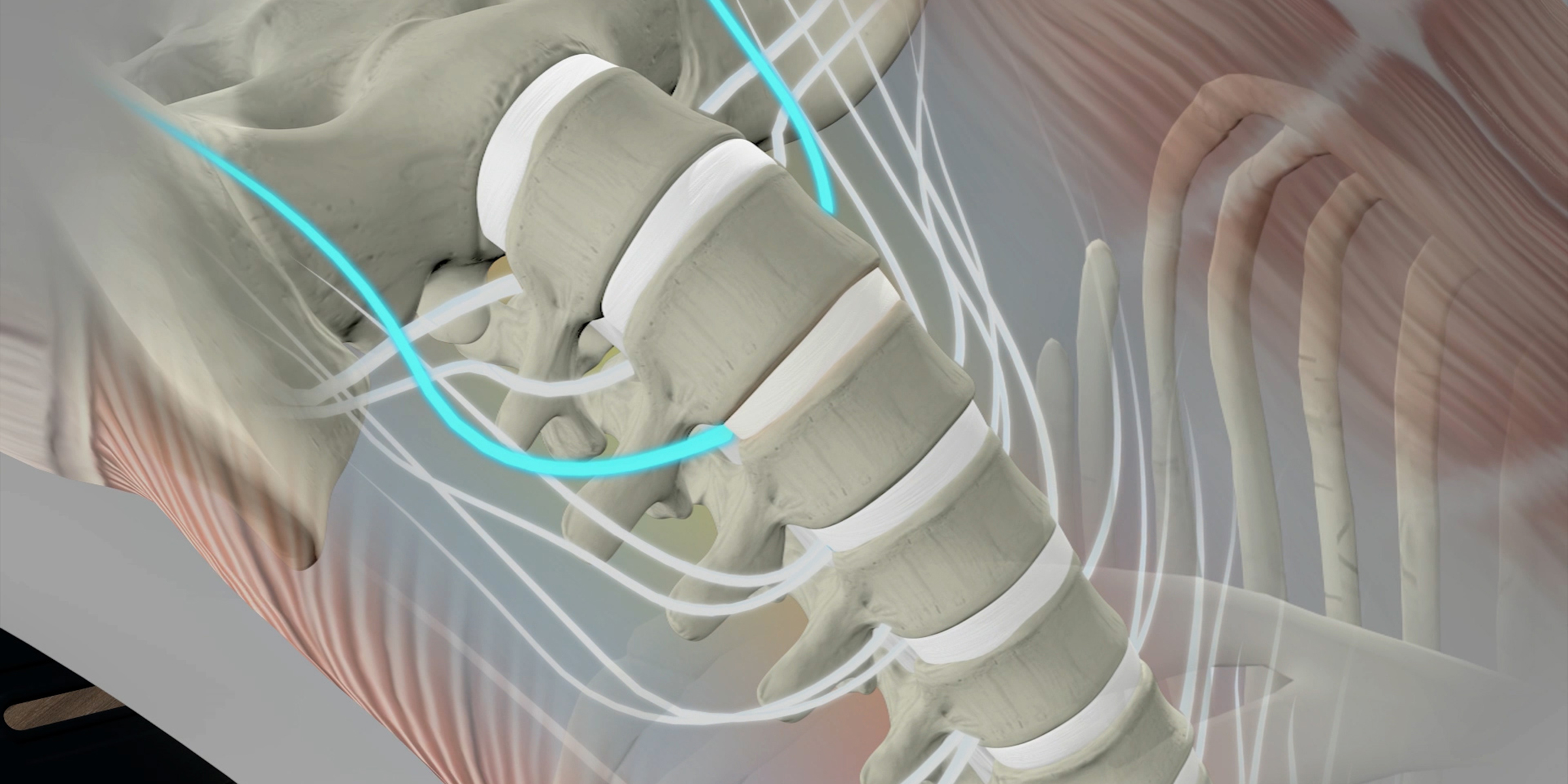
You might have seen the phrase “spinal decompression” on a chiropractor’s website, while learning about ways to treat back pain, or when looking for an inversion table. The term can be confusing because it’s used to describe a wide range of approaches, from gentle stretching or simple at-home traction to specialized machines or even surgery on the spine.
In its simplest form, spinal decompression means temporarily taking pressure off the spine. There are different ways to do this, including both surgeries and non-surgical methods. Most at-home techniques involve changing your body position, using gravity, or gentle traction to ease pressure on the spine and stretch the surrounding muscles and soft tissues.
To understand how decompression helps, it helps to know why the spine gets compressed in the first place.
Why Your Spine Compresses During the Day
Your spine is made up of a series of small bones called vertebrae. Between most of these bones are intervertebral discs, which act as flexible cushions. These discs work like shocks absorbers, helping to distribute load and allowing your spine to bend and move.
When you stand or sit upright, your spine carries the weight of your body against gravity. Our muscles also help keep your spine steady as you move, bend, lift, exercise, or do other activities during the day. Together, these everyday activities place temporary compressive forces on your spine. This is normal and does not necessarily mean that something is wrong.
Research measuring the pressure inside the lower back discs has shown that spinal pressure varies based on body position, muscle activity, movement, and the amount of weight being supported. Lying down tends to lessen the pressure, while bending forward, lifting objects, or holding something away from your body can increase it.
The discs also change slightly as they carry that load. During everyday activities, pressure slowly pushes some fluid out of the discs, causing small changes in their size and height. When the load is reduced, like during rest or overnight sleep, the discs can draw some of that fluid back in.
This normal process is sometimes called daily spinal compression. It is different from situations where the spinal cord or nerves are squeezed or pressed due to an injury or a diagnosed spinal problem.
Sitting
Sitting puts a steady amount of pressure on your spine, especially if you stay in the same position for a long time.
How much pressure you experience depends on how you sit. Sitting up straight with support is different from slouching forward, reaching toward a screen, or leaning over a desk. When you lean forward, it can make your back muscles work harder and increase the strain on your lower back.
Even if sitting feels comfortable at first, staying in one position for hours can leave your back feeling stiff and tired. That’s why changing your position regularly can be more helpful than trying to hold one “perfect” posture all day.
Lifting and Carrying
When you lift something, your muscles have to hold up both your body and the extra weight. If you hold the object farther away from your body, your back and core muscles need to work harder to control it.
Lifting while leaning forward, twisting while carrying something, or moving objects over and over can put more strain on the discs in your spine and surrounding structures. However, this doesn’t mean lifting is always dangerous. How your body reacts depends on your strength, how you lift, the weight, how often you do it, and how well you rest afterward.
Exercise and Physical Activity
Running, jumping, lifting weights, playing sports, and other forms of exercise can put temporary stress on your spine. Often, this is helpful because staying active helps strengthen the muscles that support your back and makes your body better at handling movement.
However, discomfort can happen if you do too much or push yourself too hard beyond what your body can comfortably manage. Repeating the same movements, muscle fatigue, not giving yourself enough time to recover, or having existing back issues can all influence how your back reacts to activity.
No matter if you’re sitting at a desk, standing all day, lifting objects, or working out, your spine is constantly adjusting to the different forces placed on it.
What Is Spinal Decompression?
Spinal decompression is a general term for techniques that temporarily ease the pressure on your spine or gently stretch it.
Think of the discs between your spinal bones like sponges that get squished under pressure. When you carry a load, these discs release some fluid, and when that load is reduced, they soak up fluid again. Decompression briefly changes the forces acting on your spine, giving the discs, joints, muscles, and nearby tissues a little break from their usual stress.
Depending on the method, nonsurgical spinal decompression may apply a gentle stretch along the spine, reduce the load placed on the spinal discs and joints, and change how those forces are distributed across the surrounding structures.
These effects are usually temporary. Decompression shouldn’t be thought of as permanently fixing the height of a disc, repairing a damaged disc, or fixing every cause of back or neck pain.
Some people try nonsurgical spinal decompression to help with long-term back pain or symptoms related to issues like bulging or herniated discs. A herniated disc can irritate or put pressure on nearby nerves in the spine, which might cause pain, tingling, numbness, or weakness that can travel into an arm or leg.
For conditions where pressure on spinal discs, joints, or nerve roots contributes to symptoms, temporarily reducing that pressure may help some people feel more comfortable and move more easily.
But having a bulging or herniated disc doesn’t always mean decompression will eliminate pain. Many different parts of the back can cause pain, and the best treatment depends on what’s actually causing the problem.
Spinal decompression can be one part of a larger plan to manage pain, which might also include staying active, stretching, strengthening exercises, physical therapy, or other treatments your healthcare provider recommends.
Different Types of Spinal Decompression
There are several types of spinal decompression. Although inversion, mechanical traction, and supported stretching all aim to reduce spinal load, they use different positions and types of force.
Inversion Therapy
Inversion therapy uses gravity and your body weight to create traction along the spine. On an inversion table, your body rotates backward into an angled position while remaining supported by the table. You can start with a shallow angle and gradually increase if you feel comfortable. As your body relaxes, gravity gently pulls downward, helping redistribute the forces acting on your spine while stretching nearby muscles and soft tissues. These changes are an important part of what happens to your back muscles when you invert.
Research has shown that applying gentle pulling or stretching can reduce pressure inside the discs in the lower back. Greater traction generally produced a greater reduction in pressure.
Inversion Tables offer a reclined, whole-body stretch that you can control at home. It also allows you do gentle movements or stretches while hanging upside down. There are also forward-rotating options that support your body from the hips, an effective option for people who prefer a more targeted focus on the lower back.
You can also invert using Gravity Boots attached to a sturdy bar or rack. These boots hold your body completely upside down and give you more freedom to move, making them an option for users who are already comfortable inverting.
Mechanical Traction
Mechanical traction is a type of nonsurgical spinal decompression typically performed in a clinical setting. The patient lies on a specialized traction table while equipment applies a controlled pulling force to the lower back or neck. A healthcare provider adjusts the amount and duration of traction based on the individual’s condition and response.
Stretching and Positional Decompression
Not every decompression technique involves inversion or specialized equipment. Simple body positions can also help reduce strain on the lower back.
For example, lying down with your legs supported, gently pulling your knees toward your chest, or sitting with your hips and knees bent can help the back muscles relax. These positions don’t pull on the spine as strongly as other methods, but they can temporarily shift how pressure is spread around your back.
Stretching can also help loosen up stiff muscles around the spine and improve limited movement. Although it doesn’t apply the same kind of traction, stretching for back pain relief can work together with decompression techniques to help your body move more easily.
Spinal Decompression Surgery
Spinal decompression surgery aims to create more space around the spinal cord or pinched nerve roots. Depending on the condition being treated, the surgeon may remove part of a vertebra, a bone spur, or disc material that’s pressing on nearby nerves.
Procedures like laminectomy and discectomy can be recommended for certain cases of spinal stenosis, herniated discs, or significant nerve compression when symptoms are severe or have not improved with conservative treatment. Sometimes, decompression surgery is combined with spinal fusion to help stabilize the spine.
Unlike non-surgical techniques, these procedures are invasive and involve removing or altering tissues inside the spine. Whether surgery is appropriate depends on the underlying condition, symptom severity, and your healthcare provider’s recommendations.
Can Spinal Decompression Help Back Pain?
Whether spinal decompression can help depends on what’s causing the pain, the type of treatment used, and how each person responds.
If pain comes from stiffness, pressure from daily activities, or irritation around a spinal nerve, reducing spinal pressure may help some people:
- Feel less stiff after prolonged sitting or repetitive activity
- Bend, reach, or rotate more comfortably
- Move more easily during daily tasks
- Feel more comfortable while stretching or exercising
However, these improvements might not last forever, especially if daily activities continue to put stress on the spine. Like stretching, massage, or mobility exercises, decompression can be part of a regular back-care routine to help manage pain.
Teeter Spinal Decompression Options for Home
Teeter offers a few different ways you can do spinal decompression at home, all controlled by you. Each method involves a different body position, so you can choose the one that feels most comfortable, fits your space, and matches your goals.
FitSpine Inversion Tables
FitSpine Inversion Tables let you lean back and use gravity and your own body weight to stretch your spine. You can control how much you tilt back, so you can start slowly and find a comfortable amount of traction.
The flexible backrest also allows gentle movement while inverted, so you can stretch, rotate, or shift your position as your body relaxes.
DEX II
The DEX II rotates forward and supports the body from the hips, with the knees and hips bent. This position focuses decompression on the lower back without placing body weight through the ankles.
It can also be used for inverted stretches, core exercises, and upper-body movements, offering a more active position than a reclined inversion table.
P2 Back Stretcher
The P2 Back Stretcher provides gentle, manual traction without inversion. You control the stretch using the handles while padded supports provide leverage behind the legs.
It can be used while sitting or lying down, with several positions for adjusting the stretch. Its compact design also makes it easy to store or take with you.
Teeter inversion tables and decompression devices are FDA-registered 510(k) medical devices indicated for use in helping to decompress the spine and relieve back pain-associated conditions.
Give Your Back a Different Kind of Break
Your spine works hard all day, supporting you through sitting, standing, lifting, exercise, and everything in between. Spinal decompression gives your back a chance to move out of those familiar positions and experience a different kind of stretch.
The right approach is the one that fits your body, comfort level, and routine. Whether that means supported stretching, traction, or inversion at home, giving your back time to decompress can help you move through the rest of your day more comfortably.
Ready to Decompress at Home?
Teeter inversion tables use gravity and your body weight to gently stretch your spine, all from the comfort of your home.

 Discover Teeter Blog