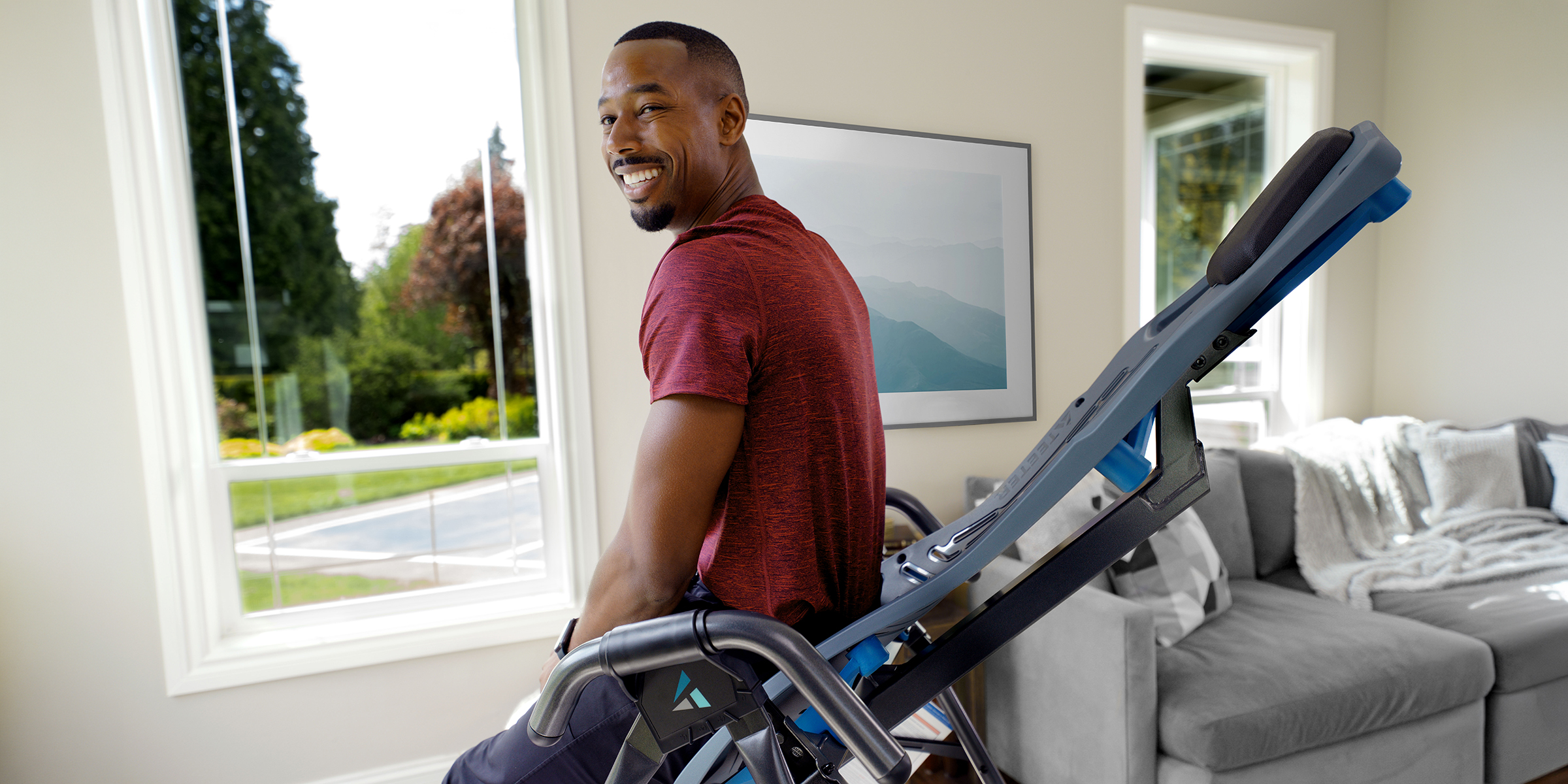
If your back feels tight or compressed by the end of the day, everyday things like bending or simply getting comfortable can start to feel more difficult than they should. Sitting, standing, lifting, and other daily activities all place pressure on the spine.
Inversion changes the direction of that load, using your own body weight to create gentle spinal traction that temporarily stretches and unloads the back. For some people, this can mean less pressure, more relaxed muscles, and easier movement.
What Are the Benefits of an Inversion Table?
An inversion table lets you recline with your head lower than your feet, allowing gravity to gently stretch and relieve pressure on your spine.
Some potential benefits of using an inversion table include:
- Temporarily relieving pressure and decompressing the spine
- Relief from certain types of back pain
- Reducing pressure on irritated nerves
- Relaxing tight muscles in the back
- Supporting better flexibility and movement
- Providing a way to stretch or exercise while upside down
How inversion feels can vary from person to person and depends in part on what is causing the discomfort. It is not a solution for every type of back pain, but it can offer another way to add gentle traction, stretching, and movement to your routine.
Spinal Decompression and Back Pain Relief
The spinal discs between your vertebrae help cushion the spine and respond naturally to changes in pressure throughout the day.
When you stand or lift, the discs experience greater compressive forces. When you lie down or move into positions that reduce that load, pressure on the discs decreases.
During inversion, gravity gently stretches the spine, temporarily increasing the space between the vertebrae and reducing compressive forces on the discs. Reducing that pressure can also support the natural movement of fluid and nutrients into the discs, which lose some fluid as they are compressed throughout the day.
This is the basic idea behind spinal decompression, and it is one of the main reasons people use inversion for back discomfort.
The decompressive effects of inversion are temporary, which is why many people make inversion a regular part of their routine. Consistent use can provide ongoing relief from everyday compression and may help support flexibility, mobility, and overall back comfort over time.
Nerve Pressure and Radiating Pain
Nerve roots branch from the spinal cord through openings between the vertebrae. A herniated disc, loss of disc height, or narrowing around those openings can sometimes irritate or compress a nerve.
When gentle stretching of the spine temporarily increases the space between the vertebrae, it may help relieve pressure on an irritated nerve root. This is one reason inversion is often discussed in connection with radiating symptoms such as sciatica.
Muscle Tension and Relaxation
Back pain and muscle tension can create a cycle of discomfort.
When your back hurts, the muscles around your spine may tighten up to protect it, which can make stiffness and discomfort greater. Muscle spasms can make that cycle even harder to interrupt.
A small controlled study using electromyography, or EMG, found reduced electrical activity in the superficial lumbar muscles during inversion, suggesting that the position may help those muscles relax.
Research into what happens to your back muscles during inversion also helps explain how changes in muscle activity may contribute to that feeling of release.
Flexibility and Mobility
Spending a long time sitting, standing, or doing the same movements repeatedly can make your back feel stiff. Inversion provides a gentle stretch for the muscles along the back while helping relieve some of the compressive load on the spine, which may support mobility and flexibility.
Some people also like to invert after exercise, particularly after activities such as lifting, running, or strength training. It offers another way to stretch after a workout and give the back a break from the loading that comes with everyday movement and exercise.
What Does Research Say About Inversion Table Benefits?
Research on inversion therapy has shown encouraging results, especially for people dealing with back pain caused by disc problems and sciatica.
A 2012 pilot randomized trial found that people with lumbar disc disease who combined inversion with physical therapy required surgery less often than those who received physical therapy alone.
A larger 2021 study by the same researchers followed 85 people with lumbar disc disease and sciatica who used inversion therapy. Over two years, 21% of the inversion group underwent surgery compared with 39% of matched controls, a roughly 50% lower surgery rate. The participants also reported less pain and improved ability to do daily activities.
These findings suggest that inversion therapy can be a helpful, non-surgical option for certain types of back pain caused by disc issues and sciatica. Learning how inversion therapy works can help explain why it may help relieve these symptoms.
Inverted Exercise and Core Strength
Full inversion can also be used for exercises such as inverted crunches, sit-ups, and squats, adding a strength and core component to your inversion routine.
Once you are comfortable controlling the inverted position, you can gradually add different exercises on your Teeter based on your comfort and experience level.
Choosing the Right Way to Invert
There is more than one way to invert, and the best setup depends on your goals and how you plan to use it.
Inversion Tables provide traditional supported inversion, with a full-length backrest and controlled rotation, allowing you to decompress and stretch at virtually any angle—from a gentle recline to full inversion. This makes it easy to adjust the experience to your comfort level and goals.
The DEX II Inversion & Core Training System supports the hips as the upper body rotates forward, offering another approach to lower-back decompression while leaving the torso free for stretching and controlled core work.
Gravity Boots attach to an inversion bar or rack and allow full inversion without a table, offering a compact option for stretching, decompression, and inverted exercise.
Give Your Back a Break from Gravity
From relieving pressure on the spine to relaxing tight muscles and supporting easier movement, inversion offers a simple way to give your back a break from the demands of everyday life. Whether you are looking for relief after a long day, more comfortable movement, or another way to stretch and stay active, inversion can be a useful addition to your routine.
Ready to Decompress at Home?
Teeter inversion tables use gravity and your body weight to gently stretch your spine, all from the comfort of your home.

 Discover Teeter Blog