When your back is a concern, cardio can feel like a risk. You want the energy, endurance, and heart-health benefits that regular movement brings, but you may also worry that the wrong workout will leave you uncomfortable or in pain afterward.
That doesn’t mean you need to avoid cardio. The key is finding movement that feels manageable, comfortable, and easy to return to consistently. For many people, that starts with choosing lower-impact forms of exercise.
Beyond Heart Health: The Benefits of Cardio
Regular cardiovascular exercise does more than strengthen your heart and lungs. It also improves circulation, builds endurance, and helps keep the muscles that support your spine active and conditioned. Stronger endurance in your core, hips, and back can make everyday activities feel more manageable, while regular movement helps reduce the stiffness that can come from spending too much time sitting or being inactive.
The key is choosing activities that let you enjoy those benefits without putting unnecessary stress on your back.
Why Low-Impact Movement Can Be a Better Fit for Your Back
Low-impact exercise lets you challenge your cardiovascular system while reducing the repeated impact associated with activities like running or jumping. This can make it a more comfortable option for people with back or joint concerns.
Low-impact cardio also keeps more than your heart working. Your core, hips, glutes, and legs all contribute to posture, balance, and everyday movement. Keeping those muscles active can help maintain the strength and endurance you rely on for things like climbing stairs, carrying groceries, walking the dog, or working around the house and yard.
And low-impact does not have to mean low effort. Depending on the activity, you can adjust your pace, resistance, workout length, or range of motion to change the challenge. That flexibility makes it easier to find an intensity that works for you and build from there.
Choosing Cardio When Your Back Is a Concern
The best cardio for lower back pain will look different from person to person. There is no single exercise that works for everyone, but lower-impact cardio exercises may feel more comfortable than activities with a lot of pounding or abrupt movement.
A few common options include:
- Walking is simple, accessible, and easy to adjust based on pace, distance, or terrain. It can also be an easy way to add more movement throughout the day without needing a gym or equipment.
- Swimming or water exercise lets you stay active while the water supports much of your body weight. It can provide a full-body cardio workout without the repeated impact of activities like running.
- Upright cycling provides continuous cardio with relatively little impact. Pace and resistance can usually be adjusted easily, giving you control over how challenging the workout feels. However, the forward-leaning posture can be uncomfortable for some people, making recumbent exercise a good alternative.
- Recumbent exercise places you in a seated position with back support, reducing the need to lean forward or support your upper body during exercise. It provides a stable, comfortable position for low-impact cardio, whether you’re using a recumbent bike or a recumbent cross trainer.
- Elliptical-style movement uses a smooth, continuous motion without the repeated landing forces of running. Resistance can be increased as your fitness improves, making it useful for both easier and more challenging workouts.
Rather than searching for one perfect exercise, look for a few practical qualities: a comfortable body position, smooth and controlled movement, adjustable intensity, and an activity you can realistically see yourself doing regularly.
The best cardio workout is one you can return to consistently, building endurance and confidence over time.
Where FreeStep and Power10 Fit
Teeter offers two different approaches to low-impact cardio at home.
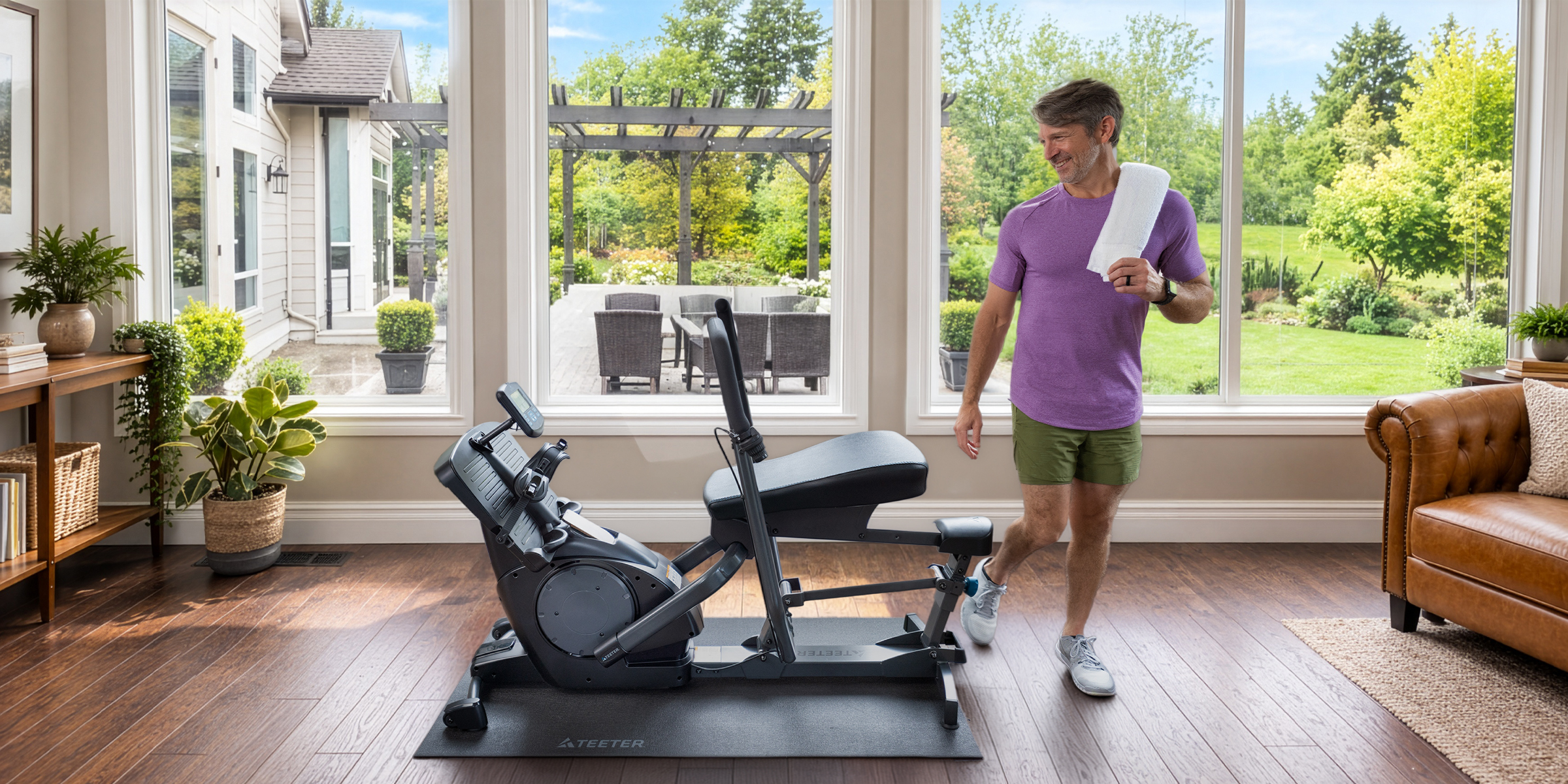
The FreeStep Recumbent Cross Trainer uses a reclined seat with back support and a smooth linear stepping motion that works the upper and lower body together. Because you remain seated throughout the workout, it can be a good fit if you prefer a more supported exercise position and controlled movement.
The resistance can be adjusted to change the intensity, making FreeStep useful for everything from lighter cardio sessions to more challenging full-body workouts. Moving handles engage your upper body alongside your legs, providing a full-body workout with the option to shift more effort between your arms and legs.
The Power10 Elliptical Rower offers a more active workout style. Its elliptical rowing motion combines push and pull resistance to engage the upper and lower body in each stroke while keeping the exercise low-impact.
Power10 may appeal more to someone who wants cardio and strength work in the same workout. Adjustable resistance lets you change the challenge depending on your fitness level and the type of workout you want that day.
Both provide low-impact ways to build cardio fitness at home, but the workout experience is different. The better fit comes down to how much support you want, the type of movement you prefer, and how you like to exercise.
Cardio Is One Part of a Well-Rounded Routine
Cardio is just one part of a well-rounded fitness routine. Strength training, stretching, mobility work, and recovery all play important roles in keeping your body strong, flexible, and ready for everyday movement.
Cardiovascular exercise builds the endurance to stay active, while strength and mobility work support the movements you rely on during workouts and daily life. Giving your body time to recover and choosing activities you enjoy can make it easier to maintain that routine.
Cardio and back health do not have to be competing goals. Choosing lower-impact exercise that feels good for your body can help you build fitness, stay active, and move more comfortably.
Explore Low-Impact Cardio at Home
Explore FreeStep and Power10 for two different ways to add low-impact, full-body cardio to your routine.

 Discover Teeter Blog