Finding the best exercise equipment for bad knees can make a major difference in how you move, how you exercise, and how much knee pain you feel day to day. When the knees or surrounding joints are irritated from arthritis, injury, surgery, or general overuse, even simple movements like stairs or bending can be harder to do. The right exercise routine can help improve comfort and restore strength, while the wrong one can make discomfort worse.
Strengthening the muscles that support the knee joint is one of the most reliable ways to reduce pain and improve stability. Harvard Medical School notes that strengthening the muscles around the knee through effective exercise can ease strain and support healthy movement.
Orthopedic Surgeon Dr. John Steedman explains that low-impact exercises are an important part of rehabilitation after a knee injury or surgery because they help restore range of motion and support the leg muscles without placing extra pressure on the joints.
What to Consider Before Choosing Exercise Equipment
Before deciding which exercise machines are best for your workout routine, it helps to understand how different movements affect your knees. Ask yourself:
- Are you bending your knees repeatedly?
- Are you placing excessive pressure on the joint?
- Does your discomfort get worse after your workout?
- Are you pushing through movements that do not feel natural?
If your bad knees are related to arthritis, knee replacement, tendonitis, or other injuries, these questions become especially important. Avoid exercises that create high impact, deep bending, or extra stress on the lower extremities. Instead, choose equipment that supports smooth movement, stability, and controlled muscle strength.
Why Some Machines Make Knee Pain Worse
How Treadmills and Stairmasters Contribute to Joint Pain
Treadmills and Stairmasters are popular for cardio exercise, but they can increase knee pain for many users. Running on a treadmill is a high-impact exercise that sends repeated forces through the knees, hips, and ankles. Even walking requires your knees to carry your full body weight, which can increase soreness if your joints are already sensitive.
Stairmasters and mini steppers often make you bend your knees much more than feels comfortable, which puts extra stress on the joint.
Why Ellipticals Are Still Challenging for Bad Knees
An elliptical trainer or elliptical machine offers a gliding motion that many users find comfortable, and elliptical training is often marketed as low-impact cardio. However, the knees remain weight-bearing throughout the movement. If you have achy knees or a limited range of motion, the repeated motion can still irritate the joint.
Because the handles move with the legs, you cannot easily shift effort toward the upper body when your knees feel strained. For some people, this leads to pain that is worse after the workout.
The Downsides of Recumbent and Upright Bikes
Exercise bikes and stationary bikes are often seen as safe choices for knee pain. A recumbent bike provides back support and reduces body weight on the knees, while an upright bike engages more core and leg muscles. Both can be helpful for cardiovascular fitness.
However, the circular pedaling motion may cause knee shearing, especially if the seat height is not ideal or if the knee does not move through its full range. A recumbent bike also limits upper body engagement, so you burn fewer calories compared to equipment that creates a great full-body workout effort.
Tips for Exercising with Bad Knees
A workout routine for bad knees should focus on improving muscle strength, balance, and mobility while avoiding high-impact activities. Incorporating resistance training, such as resistance bands or light free weights, can help strengthen the leg muscles that stabilize the knee joint.
Some helpful low-impact options include:
- Water aerobics for gentle aerobic exercise
- Tai Chi for balance, coordination, and lower body control
- Straight leg raises and gentle leg lifts for targeted muscle support
- Controlled body weight movements for stability
- Low-impact cardio equipment like rowing machines or elliptical trainers used within a comfortable range of motion.
Maintaining proper form is essential. A personal trainer or physical therapist can help ensure your movements support your knees without putting pressure where it does not belong. Many people find that adjusting intensity or switching equipment helps relieve knee pain and allows them to stay healthy and active.
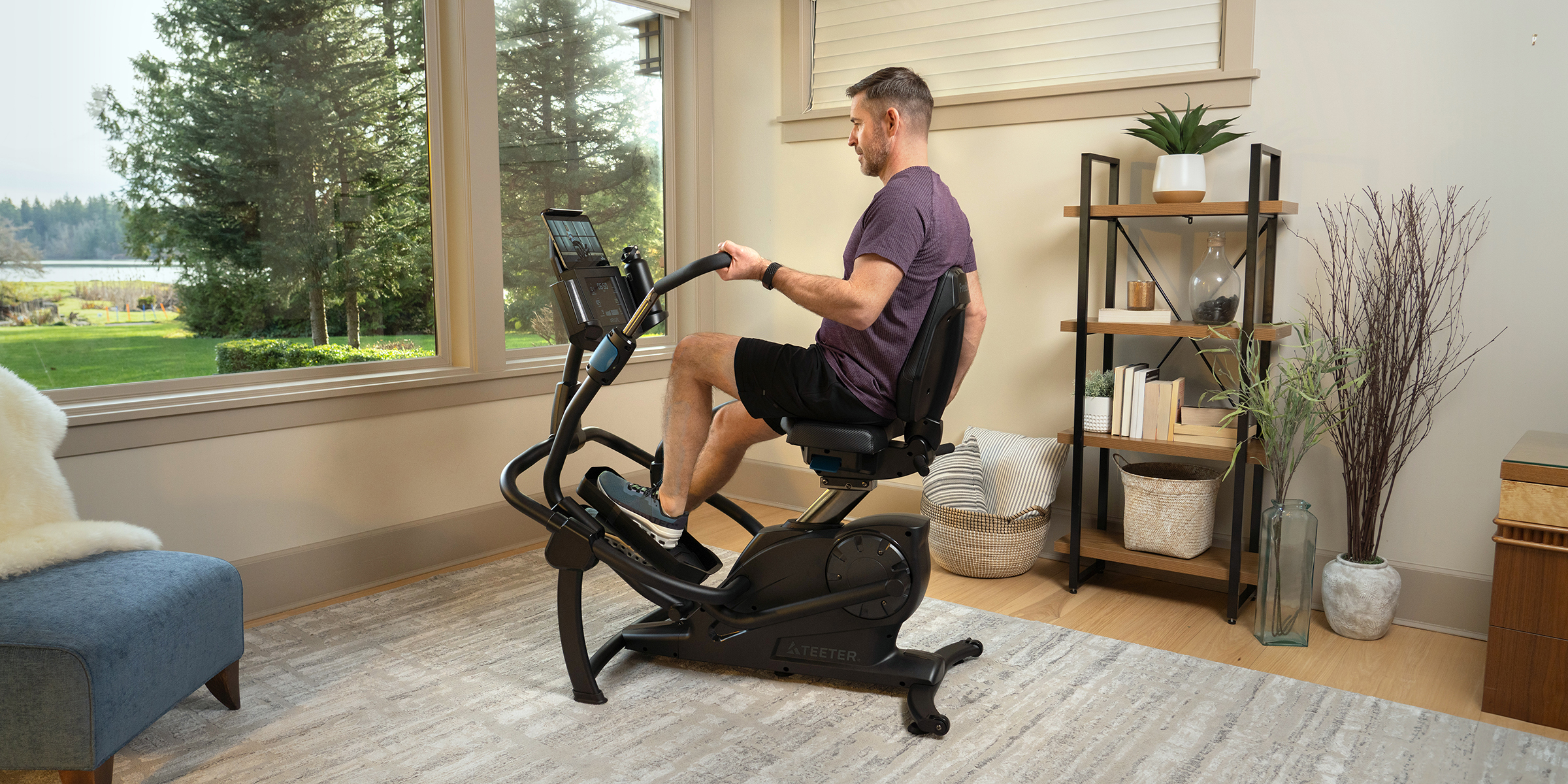
The Best Exercise Equipment for Bad Knees: FreeStep Recumbent Cross Trainer

Why the FreeStep Works Well for Knee Pain
- Zero-impact movement protects the knee joint
- Distributes effort through both upper and lower body
- Encourages muscle and bone strength without excessive pressure
- Supports proper form for full range motion
- Helps burn calories and support weight loss comfortably
The FreeStep provides a great cardio workout while also strengthening the muscles that stabilize the lower body. Its design is similar to machines often used in physical therapy settings to relieve knee pain and support rehabilitation.
Nealie’s story is a good example. After breaking her kneecap, she used the FreeStep to rebuild strength and mobility gradually. The machine allowed her to exercise without discomfort and eventually return to climbing stairs, walking confidently, and staying active. For her, the FreeStep felt like a “lifesaver.”
Feel Better With Low‑Impact Exercise
Explore equipment that helps you stay active without putting extra pressure on your knees.

 Discover Teeter Blog