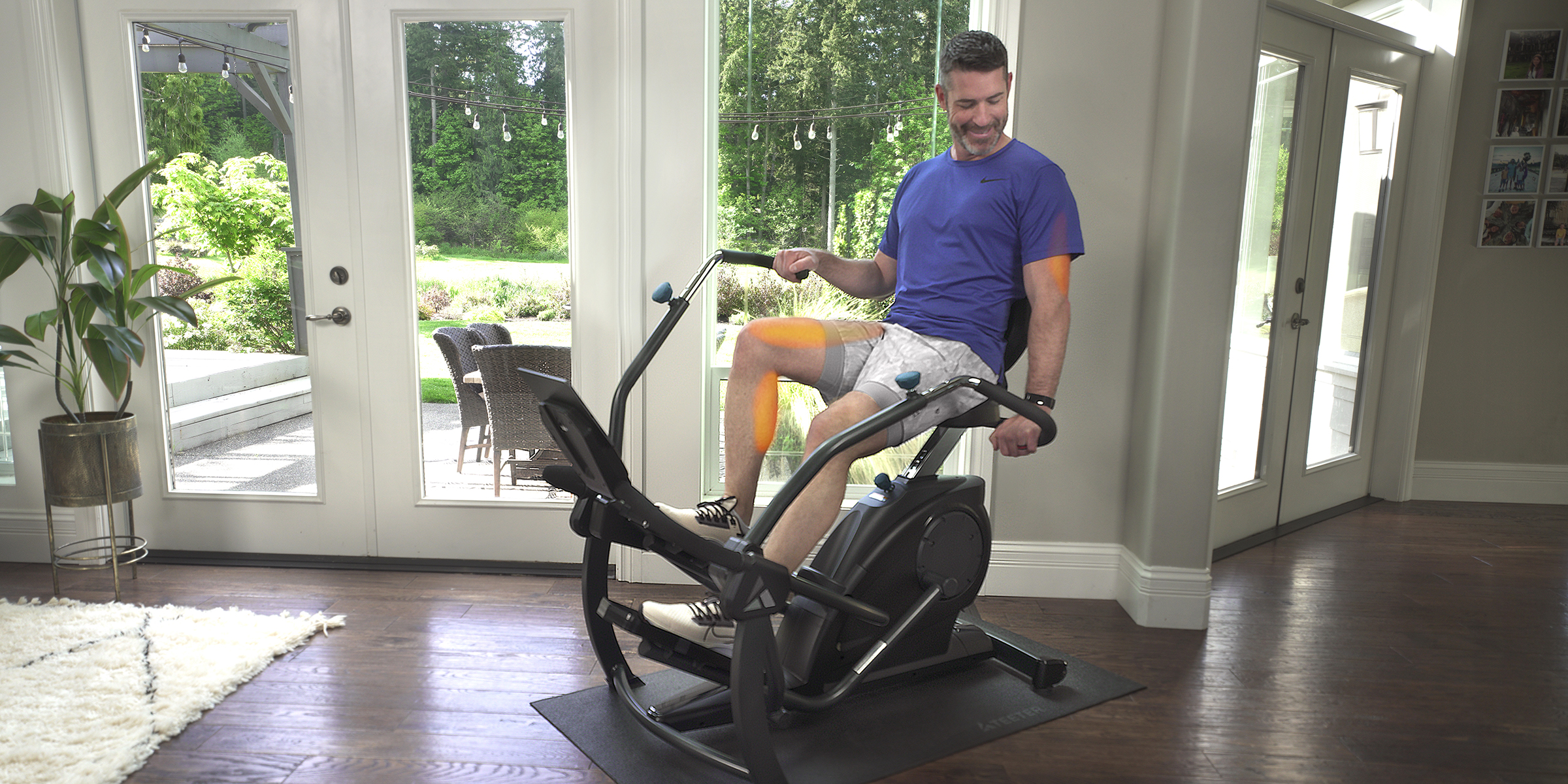
If you’ve ever heard someone say they’re skipping plans because it’s “leg day,” you might assume that kind of focused training is only for athletes or gym regulars. In reality, muscle targeting, the practice of focusing your workout on a specific muscle group, is one of the most effective approaches to strength training for people at every fitness level.
Whether you’re beginning a new fitness routine or looking to improve your current workouts, understanding how muscle targeting works can help you build strength, improve body composition, and reduce the risk of injury. When combined with regular aerobic exercise and proper recovery, muscle targeting can support overall health, stronger muscles, and better long-term mobility.
What Is Muscle Targeting?
Muscle targeting means structuring your workout so that specific muscle groups receive focused effort during an exercise session. This can be done through traditional strength training exercises such as squats or presses, or through resistance-based cardio equipment that allows certain muscles to work harder depending on how the movement is performed. Instead of pushing every major muscle group to fatigue in a single session, you concentrate your effort on one area of the body.
This method is a foundational part of many strength training workouts because it allows you to train with greater intensity while maintaining correct form and a full range of motion. It can also help reduce the risk of injury that can occur when muscles become fatigued during a long, full-body workout.
Most muscle targeting programs focus on the body’s primary muscle groups, including:
- Legs
- Arms
- Chest
- Shoulders
- Back
- Core
By training these muscle groups separately, you allow muscles time to recover and rebuild while still maintaining a consistent exercise routine throughout the week.
Major Muscle Groups to Train
A balanced strength training routine works all of the body’s major muscle groups over time.
Legs
The muscles of the legs, including the quadriceps, hamstrings, glutes, and calves, are among the largest muscles in the body. Strengthening the legs improves stability, supports balance, and makes everyday movements like walking, climbing stairs, and standing easier.
Exercises such as squats, lunges, and step-ups help build muscular strength and endurance in the lower body.
Arms
Arm training focuses on the biceps, triceps, and forearms. Strong arms help support everyday activities like lifting, carrying, and pulling.
Exercises using free weights, resistance bands, or body weight are effective ways to strengthen the arms.
Chest
The chest muscles, known as the pectorals, are responsible for pushing movements. Strengthening the chest improves posture and upper-body strength.
Body weight exercises such as push-ups are excellent for targeting this muscle group.
Shoulders
The shoulders support movement in almost every direction. Because the shoulder joint has a wide range of motion, strengthening these muscles with correct form and controlled movement helps prevent injury.
Exercises such as overhead presses and resistance exercises help build strength in this area.
Back
The back contains multiple important muscle groups that support posture and spinal stability. Strengthening the back can help reduce the risk of back pain and improve overall upper body strength.
Rows, resistance exercises, and pulling movements are commonly used to train the back.
Core
The core includes the abdominal muscles, obliques, and lower back. A strong core improves balance, coordination, and stability, helping support nearly every movement in the body.
Core exercises such as planks, stability movements, and medicine ball rotations help improve muscular endurance and support spinal health.
Muscle Targeting Benefits
Build Lean Muscle Mass
One of the most important muscle targeting benefits is the ability to build lean muscle mass. When muscles are challenged through resistance and repeated movement, the body repairs and strengthens those muscle fibers.
Over time, this leads to greater muscle mass and improved body composition, meaning a higher proportion of muscle compared to body fat.
Because muscle tissue burns more calories than fat tissue, increasing muscle mass can also help your body burn more calories throughout the day.
Improve Muscular Strength and Endurance
Strength training helps develop both muscular strength and muscular endurance.
Muscular strength refers to how much force a muscle can produce, while muscular endurance describes how long the muscle can continue working without fatigue.
Exercises that use repetition, resistance, and controlled movement improve both abilities over time.
Support Bone Density and Joint Health
Research suggests that regular strength training can help maintain bone density, which is essential for preventing osteoporosis and maintaining strong bones as we age.
Strengthening the muscles surrounding joints also helps reduce stress on ligaments and cartilage, lowering the risk of injury.
Improve Balance and Neuromotor Fitness
Strength training exercises that require coordination and stability help improve balance and neuromotor fitness, which refers to the body’s ability to control movement through coordination, reaction time, and stability.
Support Cardiovascular Health
While strength training focuses on building muscle, it also supports overall cardiovascular health.
Regular physical activity that includes both strength training and aerobic exercise can help maintain healthy blood pressure, heart rate, and circulation, while reducing the risk of heart disease.
Strength Training and Physical Activity Guidelines
According to the U.S. Department of Health and Human Services, adults should follow physical activity guidelines that include both aerobic exercise and muscle-strengthening activities.
For healthy adults, the guidelines recommend:
- At least 150 minutes of moderate aerobic exercise each week
- Strength training workouts targeting major muscle groups at least two days per week
- Activities that support balance and neuromotor fitness, especially for older adults
Research suggests that following these guidelines consistently can help improve body composition, muscular strength, cardiovascular health, and long-term mobility.
Examples of Strength Training Exercises
Many exercises can target specific muscles while improving overall fitness.
Lower Body Exercises
Squats, lunges, and step-ups primarily target the quadriceps, hamstrings, and glutes, helping build strength and stability in the lower body.
Upper Body Exercises
Push-ups, rows, and overhead presses strengthen the chest, shoulders, and arms while improving upper-body control.
Core Exercises
Planks, medicine ball rotations, and stability exercises strengthen the abdominal muscles and lower back, helping support posture and balance.
Most strength training exercises can be modified to match different fitness levels. Beginners may start with body weight exercises, while more advanced workouts may incorporate free weights, resistance bands, or medicine balls to increase intensity.
These exercises can be organized throughout the week so different muscle groups have time to recover between sessions. Many routines alternate between lower-body, upper-body, and core-focused workouts while incorporating aerobic exercise for overall fitness.
The key is performing each movement slowly, maintaining correct form, and completing each repetition through a full range of motion.
How Cardio Equipment Can Target Muscles
Muscle targeting does not have to come exclusively from traditional weight training. Many forms of resistance-based cardio also designed to challenge specific muscle groups through repeated movement and adjustable resistance.
Equipment such as elliptical trainers, rowing machines, and cross trainers combine aerobic exercise with resistance, requiring muscles to work continuously throughout the exercise. Over time, this repeated resistance can strengthen muscles, improve endurance, and support many of the same benefits associated with traditional strength training.
Depending on the movement pattern, resistance level, and workout structure, these machines can place greater emphasis on different areas of the body such as the legs, arms, back, or core.
In this way, certain fitness equipment can help bridge the gap between aerobic exercise and muscle strengthening. Some equipment designs also allow users to shift effort between upper and lower body muscle groups, creating additional opportunities for targeted muscle engagement.
How Teeter Equipment and Workouts Support Muscle Targeting
Muscle targeting can be done using a wide range of exercises, equipment, and workout styles. Teeter designs its strength and cardio equipment to make it easier to focus on specific muscle groups while maintaining proper form and low-impact movement.
Teeter Move Workouts by Muscle Group

If you prefer guided workouts, the Teeter Move app allows users to filter classes based on the muscle groups they want to train. This makes it easy to follow a structured routine that focuses on areas like legs, arms, core, or upper body strength.
Instead of guessing which exercises to perform, you can choose workouts designed to improve muscular strength, endurance, and overall fitness, while ensuring that different muscle groups receive adequate rest between sessions.
Teeter FitForm Strength Trainer
The FitForm Strength Trainer is designed for full-body resistance training with controlled movement and adjustable resistance. Because it supports a wide variety of exercises, users can target specific muscle groups such as the arms, shoulders, chest, legs, and core while maintaining correct form.
FitForm exercises allow users to perform movements similar to traditional free weight and resistance training workouts, helping build lean muscle mass and improve body composition.
Teeter Power10 Elliptical Rower
The Power10 Elliptical Rower combines elliptical movement with rowing-style resistance to create a dynamic full-body workout that engages multiple major muscle groups at once. Its push and pull resistance activates the legs, arms, shoulders, chest, and core, helping users build muscular strength and endurance while also supporting aerobic exercise.
Because the movement engages both the upper and lower body, the Power10 can be used for full-body workouts or structured routines that emphasize specific muscle groups. For example, increasing resistance and focusing on powerful leg drive can place greater demand on the lower body, while controlled pulling movements emphasize the back, arms, and shoulders. The unique grips and adjustable resistance allow users to shift effort between muscle groups while maintaining smooth, low-impact movement that supports lean muscle mass, improved body composition, and overall fitness.
Teeter FreeStep Recumbent Cross Trainer
The FreeStep Recumbent Cross Trainer provides a unique way to combine strength training and aerobic exercise with minimal joint stress.
Unlike traditional cardio machines that primarily focus on the legs, the FreeStep allows users to shift effort between upper and lower body muscle groups. By adjusting resistance and emphasizing either the arm handles or the lower-body pedals, users can place greater workload on the arms, shoulders, chest, or legs during the workout.
Research conducted by the Colorado Center for Health & Sport Science found that the FreeStep produced 17.4% greater calorie burn per hour compared with a recumbent bike at the same level of effort.
This versatility allows users to incorporate muscle targeting into a low-impact cardio routine while maintaining steady aerobic activity.
Building a Sustainable Fitness Routine
Muscle targeting is one of the most efficient ways to build strength, improve endurance, and support long-term health.
When combined with regular aerobic exercise, strength training workouts, and proper recovery, it helps improve:
- Lean muscle mass
- Body composition
- Bone density
- Balance and coordination
- Cardiovascular health
Whether you’re performing body weight exercises, lifting free weights, or using equipment like the Teeter FreeStep, the most important factor is consistency.
Over time, small improvements in strength and endurance add up, helping you stay active, reduce injury risk, and support overall health throughout life.
Ready to Start Building Strength at Home?
Target major muscle groups, build strength, and train comfortably with Teeter's low-impact equipment.

 Discover Teeter Blog