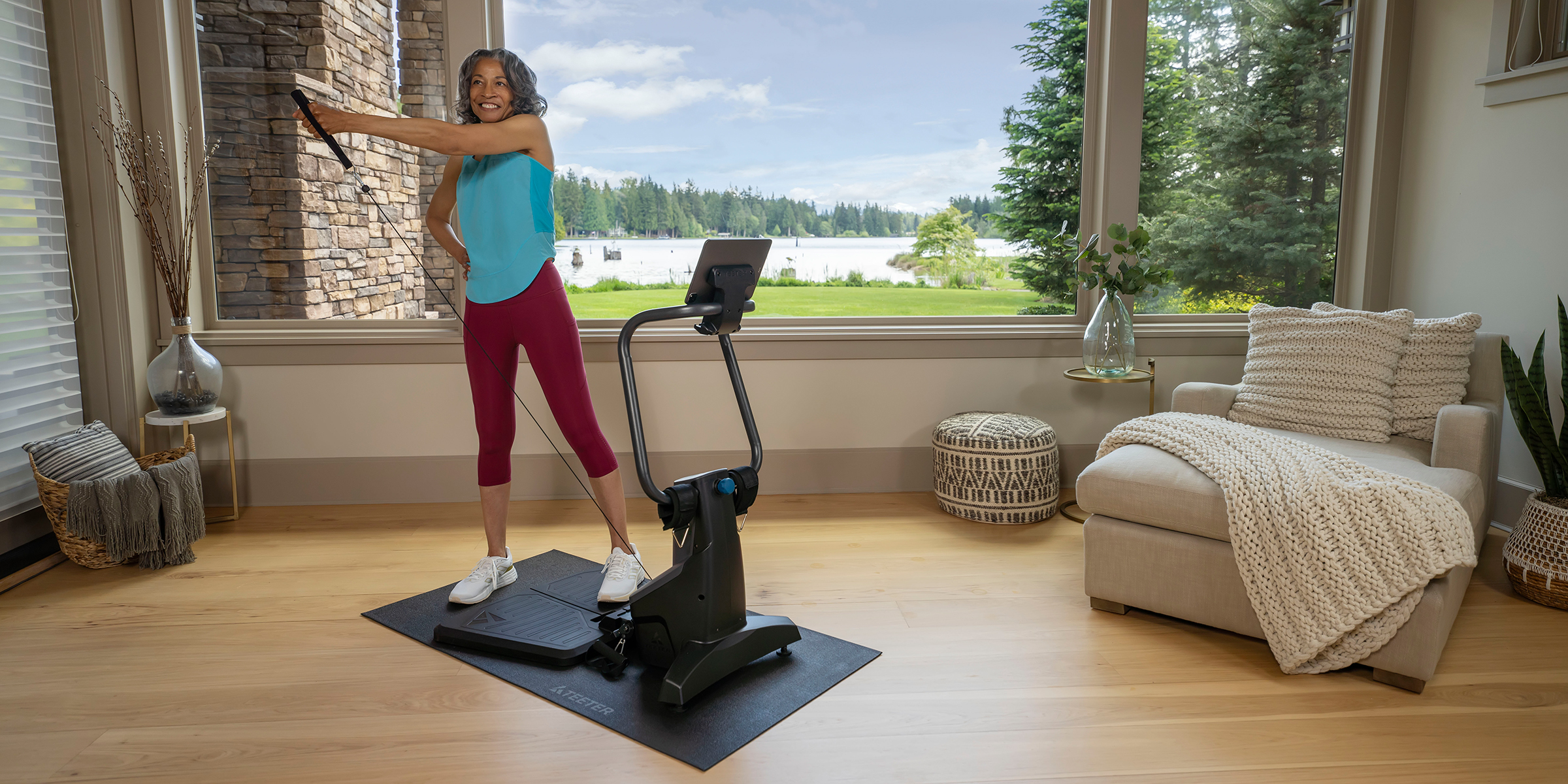
When you’re new to strength training or returning after time away, it’s normal to feel unsure about where to begin. You may be worried about sore knees, a stiff back, or doing too much too soon. Maybe you’ve tried workouts before that left you more achy than energized.
The good news is that building strength does not require high impact or heavy lifting. Low-impact strength training allows you to build muscle, support your joints, and feel stronger in daily life without unnecessary strain. If you’re looking for beginner strength training that feels manageable and sustainable, this is a smart place to start.
Why Strength Training Matters
Strength training plays an important role in long-term health, especially as we age. It supports mobility, stability, and the ability to move confidently and independently through daily life.
Regular resistance training can help:
- Build muscle mass and support bone density
- Improve balance and coordination
- Strengthen the muscles that support your joints
- Make everyday tasks feel easier
When muscles are stronger, joints are more supported. That can mean less joint pain, better posture, and more confidence in how your body moves.
For beginners and older adults, starting with a low-impact approach makes it easier to stay consistent without feeling overwhelmed.
What Low-Impact Strength Training Really Means
Low-impact strength training focuses on minimizing stress on your joints while still challenging your muscles.
Instead of jumping, pounding, or lifting very heavy weights, low-impact workouts emphasize control and alignment. Movements are steady and intentional. At least one foot typically stays grounded, and repetitions are performed slowly rather than rushed.
This allows you to challenge your muscles while placing less stress on your joints, making strength training feel more manageable and sustainable.
This approach is especially helpful for people managing joint stiffness, arthritis, or previous injuries. But even if you are not experiencing discomfort, low-impact strength training can help you create a solid foundation before progressing further.
Getting Started with Strength Training at Home
Starting strength training at home does not require a complicated program. What matters most is understanding the basic movement patterns that build strength safely. Most beginner strength training routines focus on four key areas: lower body, upper body pushing, upper body pulling, and core stability.
For example, sitting down and standing up from a chair strengthens the legs and hips. Wall presses or light chest presses build upper body strength with control. Simple movements like glute bridges or supported balance work help strengthen the core and improve stability.
Whether you use your own body weight, light weights, or home gym equipment, these same foundational patterns apply.
Aim to train at least two days per week, allowing time for rest between sessions so your muscles can recover and grow stronger. Choose a resistance level that allows you to complete about 8 to 15 repetitions with control and gradually increase resistance or repetitions as your fitness level improves.
How to Keep Strength Training Joint-Friendly
No matter what movements you choose, a few simple principles can help keep strength training low-impact and supportive for your joints.
Focus on alignment and control. Avoid locking out your joints at the end of a movement. Keep your posture steady and your core gently engaged. Move through a comfortable range of motion rather than forcing depth or extension.
Instead of rushing through repetitions, return to starting position smoothly and in control. This helps your muscles do the work, rather than shifting unnecessary strain into the joints.
Strength training should feel challenging in the muscles, not sharp or irritating in the joints. If a movement causes persistent discomfort, reduce the resistance, shorten the range of motion, or check your posture.
When workouts feel controlled and manageable, consistency becomes much easier.
Pairing Strength with Low-Impact Cardio
Strength training is most effective when combined with cardiovascular activity. Low-impact cardio supports heart health, circulation, and endurance without placing extra pressure on sensitive joints.
Walking at a comfortable pace, using a stationary bike, or choosing supported equipment like an elliptical can all improve cardiovascular health while staying gentle on the body.
The goal is steady movement you can return to consistently.
Equipment That Supports Low-Impact Workouts at Home

The Teeter FitForm Home Gym is designed around low-impact resistance training with adjustable resistance that allows you to build strength gradually. Its smooth motion encourages controlled repetitions rather than momentum, helping you focus on alignment while building muscle in a joint-friendly way.
If you prefer traditional strength exercises, adjustable dumbbells like the ProFlex 432 allow you to increase weight gradually without cluttering your space. Using lighter weights and slightly higher repetitions can help beginners focus on form and build confidence before progressing.
TeeterBell offers a compact, multi-grip design that combines the feel of several traditional tools in one weight. Its versatility makes it easy to transition between exercises and adjust speed, range of motion, or rhythm, which can support controlled, low-impact strength exercises at home.
When strength training is paired with joint-friendly cardio, equipment like the FreeStep Recumbent Cross Trainer or Power10 can provide smooth, low-impact full-body workouts that support both endurance and muscle strength. Adjustable resistance engages muscles through every movement, helping build strength while the supported, controlled motion minimizes stress on the knees, hips, and back.
For added guidance, the Teeter Move app offers trainer-led workouts designed specifically for low-impact training at home, helping you build confidence and progress safely.
Building Strength You Can Sustain
When it comes to low-impact strength training, consistency matters more than intensity.
Start slowly and keep sessions manageable. Allow your body to adapt before increasing resistance, extending workout time, or adding new exercises. Strength is built steadily, through repetition and gradual progression, not through pushing to exhaustion.
Low-impact strength training is about choosing movement that supports your body rather than stressing it. By focusing on controlled resistance, proper alignment, and joint-friendly mechanics, you can build muscle, improve balance, support bone density, and stay active with greater confidence.
Start where you are. Move with intention. Over time, that steady approach creates lasting strength.
Ready to Start Building Strength at Home?
Explore Teeter's low-impact strength solutions designed to support your joints and help you move with confidence.

 Discover Teeter Blog