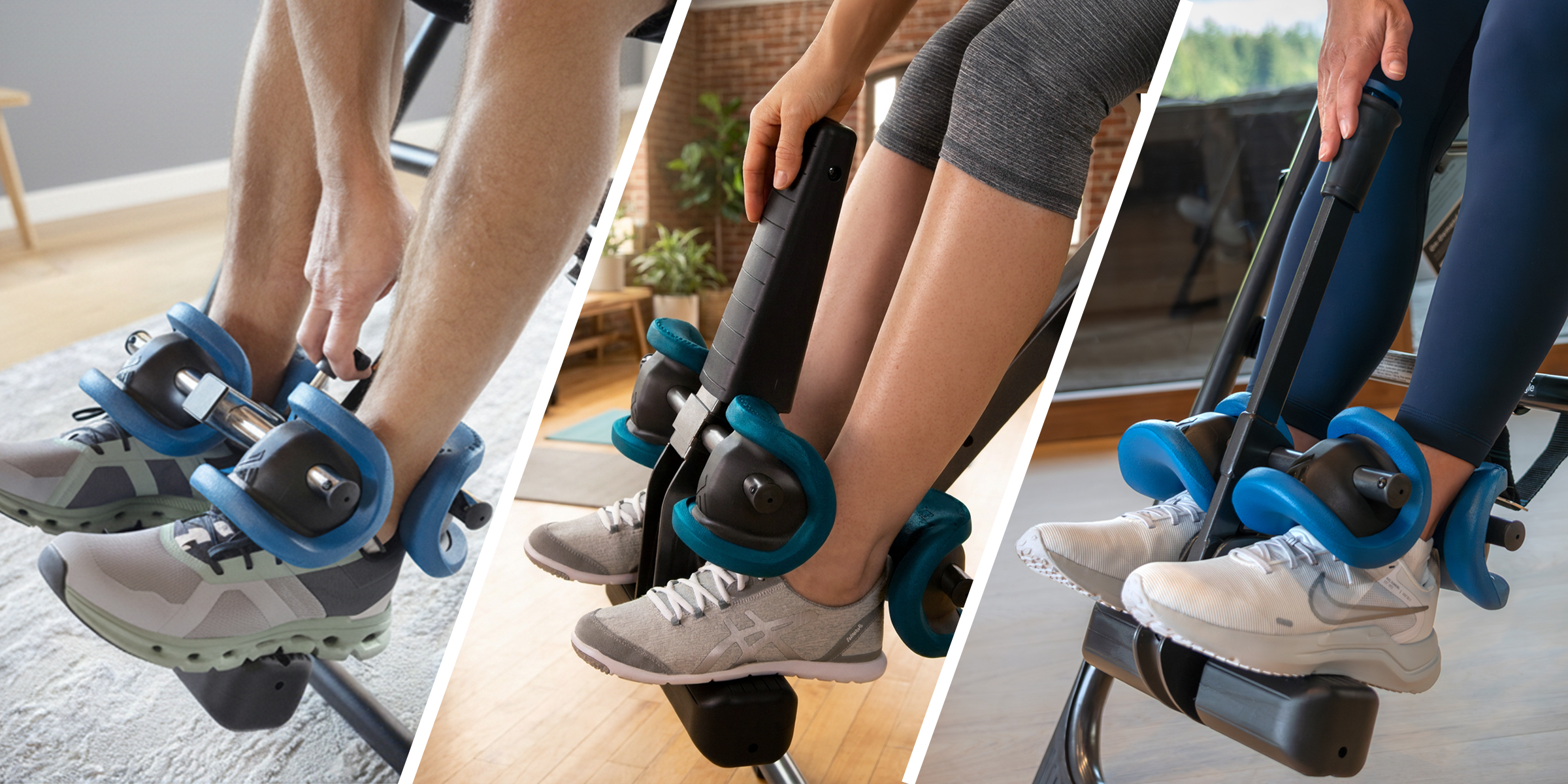
When choosing an inversion table, comfort and control matter, but one of the most important features is the ankle lock system- the mechanism that secures your feet and ankles before you rotate into inversion. While it may seem like a small detail, the design of the ankle lock plays a major role in how stable, supported, and confident you feel while using your table.
Teeter inversion tables pair the ankle lock systems with Ergo-Embrace Ankle Supports, a wrap-around design that helps distribute pressure more comfortably. While all Teeter ankle systems are built with support and safety in mind, the locking mechanism itself can vary by model.
Here’s how Teeter ankle lock systems work, how they compare, and what to consider when choosing the right inversion table for your needs.
What Makes a Good Inversion Table Ankle Lock System?
A good inversion table ankle system should do more than simply “lock.” It should help keep you securely positioned, feel comfortable around the ankles, and be easy to adjust before and after inversion.
On Teeter inversion table models, every ankle lock system includes Ergo-Embrace Ankle Supports and is designed to keep users secure while inverted for comfort and relief. While many basic inversion tables use straight padding around the ankles, Teeter’s wrap-around design is shaped to help distribute pressure more evenly. The hard outer shell also adds structure for a secure fit, while the Ankle Comfort Dial allows users to adjust the ankle supports for a more personalized fit.
Ease of use matters, too. Some ankle lock mechanisms require more bending to secure the ankles, while others use an extended handle to make locking and unlocking easier. This can be especially helpful for users who have back discomfort or limited flexibility.
Safety is another key factor. Teeter inversion tables are FDA-registered Class I medical devices designed to provide non-powered traction and stretching, and they are also UL safety-certified. The ankle lock is one of the components evaluated under UL 1647, the safety standard for inversion tables, giving users added confidence that the equipment has been evaluated by an independent third party.
Why Ankle Security Matters During Inversion
Inversion tables use gravity-assisted traction to help create a gentle decompressive stretch. Because your body weight shifts as you rotate backward, a secure ankle lock system helps you feel supported through the movement so you can relax more comfortably into the stretch.
A well-designed ankle system can also make the table easier to use before and after inversion therapy. Features like wrap-around ankle supports, adjustable comfort settings, and extended locking handles can help reduce strain when securing your ankles, especially for users who want a smoother setup experience.
While the ankle lock system is only one part of the full inversion table design, it plays an important role in comfort, control, and confidence while using the table.
How Teeter Ankle Lock Systems Compare
While every Teeter ankle system includes Ergo-Embrace Ankle Supports, the locking mechanism can vary across the Teeter inversion table lineup. The main differences come down to locking style, reach, and ease of use.
| Ankle Lock System | Description | Found On | Best For |
|---|---|---|---|
| T-Pin Ankle Lock System | Spring-loaded pin design with audible and visual confirmation when locked. | EP-560, X1, XT1 | Users comfortable bending to secure and release their ankles. |
| EZ-Reach Ankle System | Extended locking handle reduces the amount of bending needed to secure and release the ankles. | X2, FT-1, FS-1, FX-2 | Users who want easier entry and exit with less bending. |
| Deluxe EZ-Reach Ankle System | Extra-long locking handle with micro-adjusting closure for a more customized fit and the least amount of bending. | LX9, X3, XC5 | Users seeking the easiest reach, greatest adjustability, and premium comfort features. |
The T-Pin system is a simple, secure option for users who are comfortable bending forward to lock and release their ankles. The EZ-Reach and Deluxe EZ-Reach systems are designed to make that process easier, with the Deluxe EZ-Reach offering the longest handle and most adjustability.
Tips for a Comfortable, Secure Fit
No matter which Teeter ankle lock system your inversion table has, proper setup makes a difference.
Before you invert, make sure the ankle lock is fully engaged and that your ankles feel snugly supported. The fit should feel secure, but not painfully tight. Adjust the ankle supports as needed, look and listen for clear visual and audible confirmation that the lock is fully engaged before rotating backward.
Wearing secure, lace-up shoes can also help improve comfort and stability by creating a more supportive surface between your feet and the ankle supports.
If you are new to inversion, start at a mild angle before moving into deeper inversion. This gives your body time to adjust, become comfortable with the feel of the table, and relax as your back, hip area, and surrounding muscles settle into the stretch. Always follow your owner’s manual and stop using the table if you feel pain, dizziness, lightheadedness, or unusual discomfort.
Which Teeter Ankle Lock System Is Right for You?
The best ankle lock system depends on your model, mobility, and how much reach assistance you want.
If you are comfortable bending forward, the T-Pin Ankle Lock System offers a simple, secure design. If you want to reduce how far you need to reach, the EZ-Reach Ankle System offers an easier locking experience. For the easiest reach and the most adjustability, the Deluxe EZ-Reach Ankle System is the best option to look for.
For shoppers today, the ankle lock system is just one part of the complete inversion table experience. The backrest design, handles, accessories, and comfort features all play a role in choosing the right model for your needs.
Choose the Teeter That Fits You Best
See how our inversion tables compare and find the model with the comfort, support, and ease-of-use features you need.

 Discover Teeter Blog