If you’ve been told to stay active but workouts keep leaving your knees aching or your back sore, it’s easy to start wondering if real strength training is just not for you. Some workouts can seem intense, sudden, and physically demanding.
None of that intensity is required to build real strength. Muscles respond to resistance, control, and consistency. Joint stress plays no role. A workout can be completely joint-friendly and still deliver meaningful strength gains, better muscle engagement, and long-term progress.
Low-impact training is a practical and sustainable way to build strength while avoiding back discomfort, sensitive knees, or joint stress.
What Is Low-Impact Strength Training?
It is a common misconception that “low-impact” means “easy.” This is not the case. In low-impact strength training, controlled, resistance-based movements are used to build muscle without forceful movements, jarring landings, or abrupt transitions. The body stays in a stable position throughout each exercise, and movement is steady and deliberate rather than reactive.
It is possible for a workout to be joint-friendly and still feel genuinely challenging at the same time. Resistance, tempo, repetition volume, and muscular fatigue all play a role. Exercises like chair squats, band rows, incline pushups, glute bridges, and controlled machine-based movements are all examples. These can be performed using body weight, resistance bands, dumbbells, cable systems, or guided home equipment. The focus stays on working the muscles with control, not generating force through speed, similar to low-impact strength training workouts for beginners that prioritize steady, controlled movement.
Why Low-Impact Workouts Can Still Build Strength
Strength training doesn’t depend on how fast or intense a movement looks. It depends on whether your muscles are being challenged in a way that builds over time.
Studies comparing different training styles have shown that both lighter and heavier resistance can support strength gains when exercises are performed with enough effort and consistency. The key is not the style of movement, but how the muscles are being used.
This is why low-impact workouts can still be effective. When movements are controlled and resistance is applied with intention, your muscles are still doing the work needed to build strength.
Muscle Engagement Improves When You Slow Down
One of the defining features of low-impact strength training is a slower, more controlled pace, reducing momentum and keeping your muscles engaged for longer during each repetition.
For example, lowering into a squat over a few seconds and pausing briefly at the bottom requires your legs and hips to stay active the entire time. Compare that to dropping quickly and bouncing back up, where momentum does part of the work. This added time under tension makes each movement more demanding, even if it looks simple.
The same idea applies to upper-body movements like rows or presses. Controlling both the lifting and lowering phases makes each repetition more effective, even without increasing weight.
Better Control Leads to Better Form
Low-impact training naturally encourages more attention to posture, alignment, and how each movement feels. When you move with control, it becomes easier to focus on the muscles you’re trying to work instead of letting other areas take over, which is a key part of maintaining proper form in strength training workouts. This can help improve how efficiently each exercise is performed, allowing you to focus on a specific muscle group and reduce unnecessary strain.
When you slow movements down and focus on proper form, you’re more likely to engage the right muscles and move with better control. This can help reduce compensating with other areas and support more stable, confident movement.
Over time, this carries over into everyday activities, helping you feel more steady and supported in how you move.
It’s Easier to Stay Consistent
A workout doesn’t need to leave you exhausted to be effective. Low-impact strength training often feels more manageable, which makes it easier to return to regularly.
Consistency plays a bigger role in building strength than any single workout. A routine you can stick with week after week will lead to better results than one that feels too intense to maintain.
For many people, reducing unnecessary joint stress makes it easier to stay active without feeling worn down. Over time, that consistency is what leads to real progress.
Effective Low-Impact Workouts Don’t Have to Be Complicated
Simple, repeatable movements that challenge your muscles and can be adjusted over time are enough.
Lower Body
Chair squats, glute bridges, supported split squats, step-ups, and wall sits help build strength in the legs and hips without impact. Slowing the movement or adding light resistance make them more demanding.
Upper Body
Incline pushups, chest presses, band rows, and shoulder-friendly pressing variations build upper-body strength using controlled resistance and stable positions.
Core and Back
Exercises like bird dogs, dead bugs, side planks, glute bridges, and supported hip hinges focus on stability and control, which supports overall movement and strength.
How Teeter Supports Low-Impact Strength Training
Understanding why low-impact strength training works is one thing. Building a consistent routine is another. That’s where Teeter Move comes in.
Guided Classes Keep You Focused on What Matters
Guided workouts can make it easier to stay on track, especially when you’re building a routine at home. The Teeter Move app offers free, instructor-led classes designed around low-impact strength training, along with structured programs that help you progress over time. Programs like the Find Your Fit Series are designed with clear milestones, so you can build strength and confidence gradually without having to figure out what to do next.

Teeter Move offers a wide range of individual classes that can be filtered based on equipment, target areas, training style, class length, and difficulty level. This makes it easier to choose workouts that fit your schedule and focus on specific muscle groups – so you can simply press play and get started.
Equipment That Supports Controlled, Low-Impact Movement
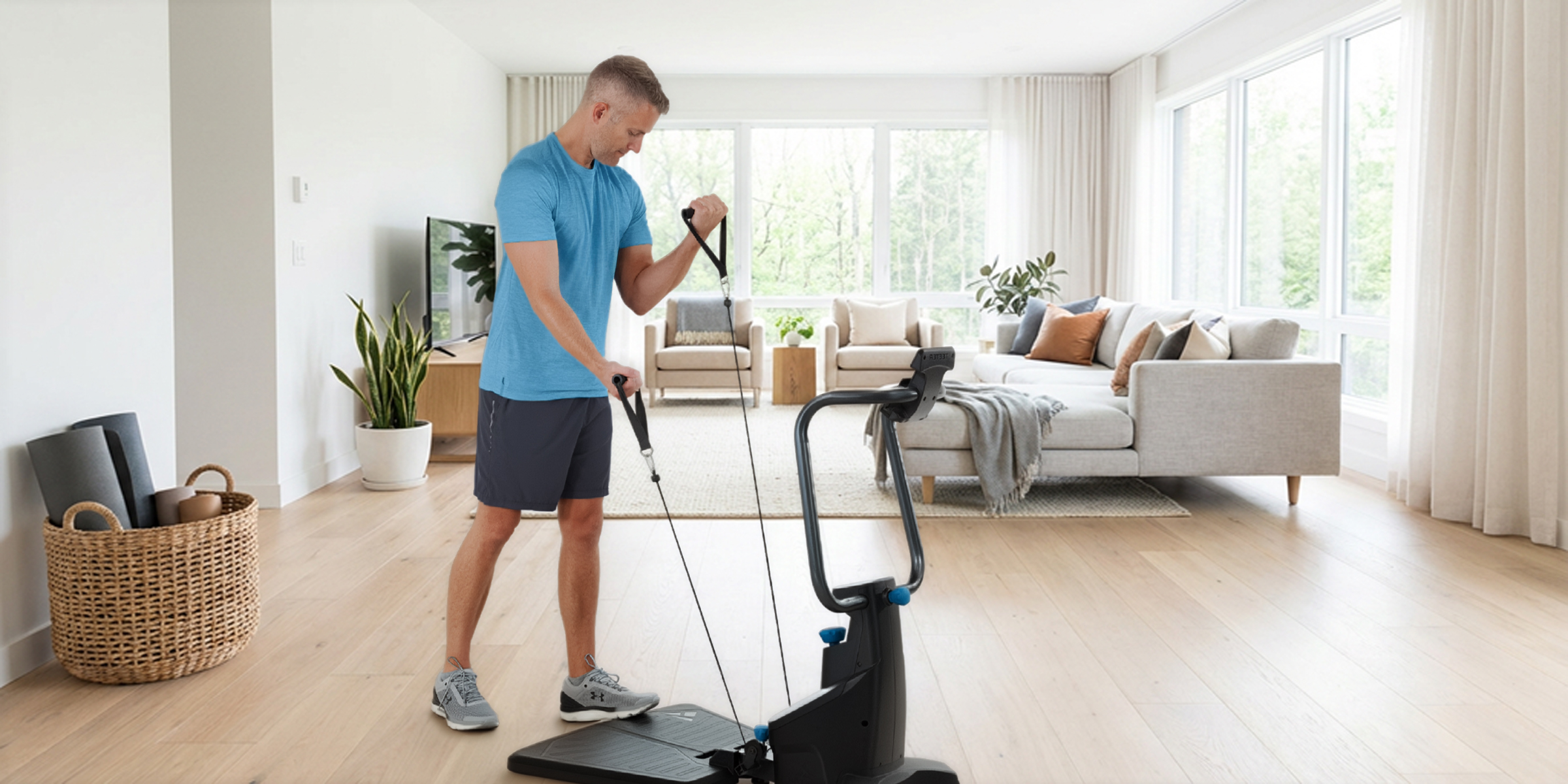
Equipment can also support controlled, low-impact movement. The FitForm Strength Trainer uses cable-based resistance to guide smooth, steady exercises that help you focus on specific muscle groups while tools like the TeeterBell offer a simple, versatile way to build strength with controlled, low-impact movements at your own pace.
The Power10 Elliptical Rower combines low-impact cardio with strength engagement through a continuous, resistance-based motion that works both the upper and lower body.
For home workouts, having both structure and the right tools can make it easier to stay consistent and continue progressing.
Who This Style of Training Works Best For
Low-impact strength training works for a wide range of people. It can be especially helpful for those returning to exercise, anyone who wants to be mindful of joint stress, or people looking for a more sustainable way to build strength.
It’s also a useful addition for more experienced exercisers who want to balance high-intensity workouts with more controlled strength work.
If you have a recent injury or ongoing pain, it’s always a good idea to check with a healthcare professional before starting a new routine.
Common Mistakes That Can Limit Results
Low-impact workouts are effective when they still challenge your muscles with purpose.
Going Too Light for Too Long
Using the same level of resistance without increasing the challenge can limit progress. Your muscles need gradual increases in demand to keep adapting.
Moving Too Quickly
Rushing through movements shifts the work away from your muscles and toward momentum. Slowing down helps keep the muscles engaged throughout the movement.
Thinking “Low-Impact” Means “Easy”
Low-impact refers to joint stress, not effort. The exercises should still feel challenging in your muscles, even if they’re controlled and steady.
Low Impact Doesn’t Mean Low Results
Low-impact strength training works because it focuses on what actually drives results: resistance, control, and consistency.
High-impact movement isn’t required to build strength, and for many people, avoiding unnecessary strain makes it easier to stay consistent over time.
Focusing on controlled movement, gradual progression, and regular training creates a more sustainable path to getting stronger. Over time, that approach can help you move more comfortably, feel more capable in daily life, and build strength that lasts.
Ready to Start Building Strength at Home?
Teeter Move offers free guided low-impact strength classes you can do at home, at your own pace.

 Discover Teeter Blog